


More Than a Surface: What Our Skin Reveals, What We Expose It To, and What We May Be Overlooking
My hands are my tools.
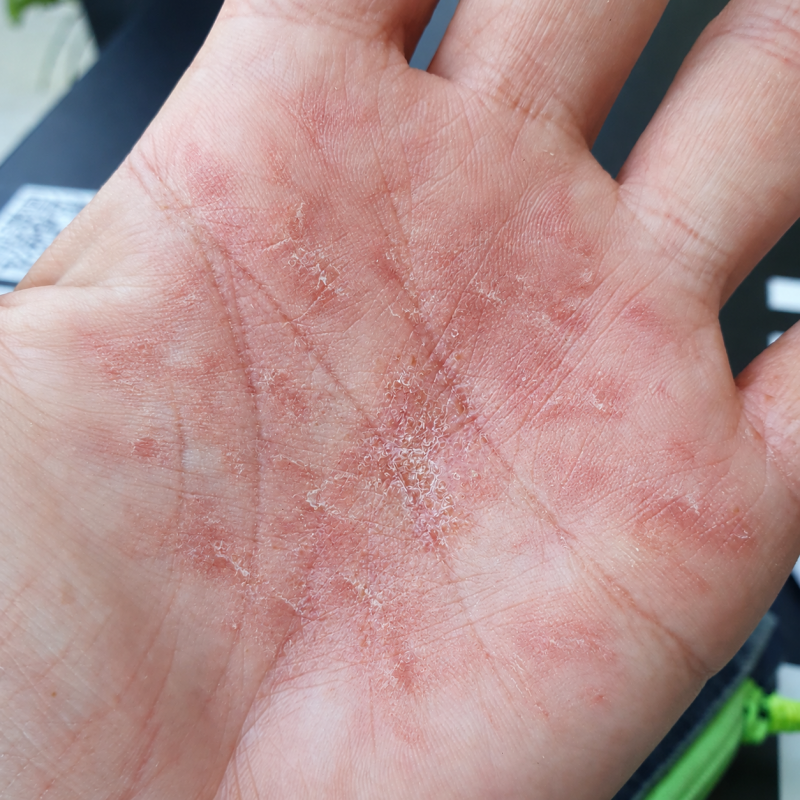
As a massage therapist, I work through touch. Through my hands I connect with people, feel tension, offer comfort, and communicate without words. Until my own skin decided to interrupt that conversation. I developed severe reactions on my hands. The irritation became so bad that, for a while, I had to stop working.
Imagine that.
The very part of my body I depended on to care for others suddenly needed care itself. Naturally, I began looking for answers. Massage oils? Creams? Essential oils? Cleaning products? Something I was touching every day? The first step seemed obvious. Change the products. So I did. Then came the doctors. Allergy investigations. Dermatology appointments. But nothing gave me a clear explanation. The prescribed medical creams helped my irritated skin heal, yet every now and then, the problem returned.
Why?
I started observing more carefully. What had I eaten? What products had I used? Where had I been? And eventually, another question appeared.
What was happening in my life when my skin reacted?
What was I feeling? What was stressing me? Was there something I was holding on to? Over time, I began noticing a pattern involving stress and certain emotions. I couldn't prove those emotions were causing my skin problems. But the observation was meaningful enough to make me curious. About emotions. About releasing. About letting go. And that's where another part of my journey into awareness began.
When Skin Meets Emotions
There is a fascinating connection between our skin, nervous system and emotions.
Researchers study what is known as the brain–skin axis.
Our skin contains nerves, immune cells and receptors that respond to signals involved in stress and inflammation. Psychological stress can influence skin-barrier function, itching, healing and inflammatory responses. Conditions such as eczema and psoriasis may worsen during stressful periods. And the relationship works both ways. A persistent skin condition can itself create stress, frustration, discomfort and sleepless nights, sometimes contributing to a difficult cycle.
This is physiology, not imagination.
But does that mean emotions cause every skin condition? Of course not. The human body is far too complex for such a simple explanation.
Biodecoding — Could There Be Another Message?
During my own journey, I became interested in biodecoding — an approach that proposes connections between physical symptoms and unresolved emotional conflicts. For example, skin is sometimes symbolically associated with contact, separation, protection and boundaries. For someone whose hands are central to their work, these ideas can feel especially personal.
They made me ask questions I hadn't previously considered. Am I comfortable with the situation I'm in? Do I feel safe? Where am I allowing something that doesn't feel right? What am I holding on to? What might I need to release?
I found these questions interesting, even if I wasn't ready to accept every explanation. And here it's important to distinguish between a meaningful personal insight and a medically established cause.
Biodecoding's proposed links between specific emotional conflicts and diseases have not been scientifically validated.
That doesn't mean we must stop exploring our emotions. It means we should be careful not to turn an interpretation into a diagnosis or make somebody feel responsible for becoming ill. For me, the exploration led to something valuable. Learning to let go. Not forgetting or pretending something didn't hurt. Sometimes letting go means accepting that we cannot change the past, control another person's behaviour, or carry every responsibility forever. I cannot say that releasing emotions cures skin allergies. But becoming more aware of my reactions changed the way I began looking at myself.
And sometimes the greatest change isn't immediately visible on our skin.
Our Largest Organ — More Than Appearance
Did you know that skin is the largest organ of the human body? Not just something to moisturise, exfoliate, decorate, tan or cover. An organ. A living system of different layers, nerves, blood vessels, immune cells and microorganisms. Our skin helps regulate temperature, prevent water loss, defend against environmental threats and allows us to experience touch. Warmth. Cold. Pressure. Pain. Pleasure. A gentle hand. An unexpected touch. It is our physical boundary with the outside world.
Yet we spend enormous amounts of time judging its appearance. Wrinkles. Spots. Scars. Stretch marks. Pigmentation. Ageing. Smooth enough? Young enough? Beautiful enough?
Our skin has become a commercial obsession. But here's a question I rarely hear in beauty advertising:
Is what we're doing to make our skin look better always helping it function better?
Through my work I see many different bodies and skin conditions. In my own practice, I estimate that around every third client has some skin concern — dryness, eczema, psoriasis, irritation or unusual sensitivity.
That is my personal observation, not a medical statistic.
Still, it makes me wonder how much of what we experience is influenced by our biology, environment, occupations, daily habits and the products we use. And how often are several factors interacting at the same time?
The First Uncomfortable Truth: Even Water Can Damage Our Skin
Water?
The substance we associate with cleanliness and life?
Yes.
Frequent handwashing, soaps, detergents and repeated exposure to water can damage the skin's protective barrier. For people working with their hands, this is particularly important. Hairdressers. Nurses. Cleaners. Beauty therapists. Massage therapists.
The British Association of Dermatologists identifies frequent wet work as an important risk factor for hand dermatitis. And here's another important distinction.
Not every skin reaction is an allergy.
Allergic contact dermatitis involves an immune response to a substance, while irritant contact dermatitis can develop through repeated damage to the skin barrier without a specific allergy. Both can exist together. There is no single diagnostic test for irritant dermatitis, and negative allergy tests don't necessarily exclude every possible contact allergy. A test can tell us something. It doesn't always tell us everything. That is a distinction I find especially interesting when reflecting on my own experience.
Natural Doesn't Automatically Mean Safe
I love plants. Their fragrances, textures, history, traditional uses and connection to bodywork. Essential oils are part of the world of aromatherapy. But loving nature shouldn't mean believing everything natural is harmless. Essential oils are concentrated mixtures of chemical compounds. Yes, chemicals. Everything in nature is made of chemicals, too. Tea tree, lemongrass, ylang-ylang, clove and other essential oils are recognised causes of allergic contact dermatitis in susceptible people. And here's a detail I find fascinating. Some fragrance compounds, including limonene and linalool, can react with oxygen when exposed to air. Their oxidation products can become more allergenic than the original compounds. Meaning that a fragrance ingredient may change as a product ages. Suddenly, choosing skincare becomes more complicated than deciding between natural and synthetic. How concentrated is it? How is it stored? How often is it applied? Is the skin already damaged? A product can be beautifully sourced and suitable for many people, yet still cause problems for someone else.
Natural describes an origin. It doesn't guarantee safety.
What Labels Don't Always Tell Us — Cosmetics and Fabrics
Walk through almost any shop and look at the language surrounding skincare.
Natural. Pure. Botanical. Clean. Gentle. Hypoallergenic. Dermatologically tested.
The words sound reassuring. But what do they actually tell us? Not always as much as we imagine. Fragrance is a good example. Perfume compositions may appear on cosmetic labels as parfum or aroma, while certain fragrance allergens must be listed separately above specified concentration thresholds.
In 2023, the European Union expanded its cosmetic fragrance-allergen labelling requirements, adding 56 allergens to the existing individual labelling rules. Newly placed products had to comply with the expanded requirements from 31 July 2026, while products already on the market have a transition period until July 2028.
Why? Because fragrance sensitisation is a recognised problem. Not a secret. A documented fact. Yet how many of us read the ingredients before choosing a product advertised as natural or gentle?
And here's something else.
What about the fabrics touching our skin?
Our clothes, bedsheets, towels and everything that remains against our bodies for hours each day. Cotton, linen, wool, polyester, nylon... For people with eczema or sensitive skin, fabric choice can make a noticeable difference.
Cotton is often recommended because of its softness, breathability and comfort, while certain fabrics can contribute to sweating, friction or itching. But there's more to consider than the fibres themselves. Textiles may contain dyes, chemical finishing agents and resins. Certain textile dyes and formaldehyde-based finishing agents are known causes of allergic contact dermatitis.
So even a label saying 100% cotton doesn't necessarily tell us everything about how the fabric was processed.
Cotton and Healing Frequencies?
Looking into the history of cotton brought me to another fascinating subject. Cotton has a long history in medical care. Doctors were documenting cotton-wool wound dressings as early as the nineteenth century. Its softness, absorbency and suitability for hygienic preparation made it useful. But I've also come across claims that natural fibres have particular energetic frequencies that may support healing.
A frequently shared account attributes such measurements to a 2003 investigation by Heidi Yellen, comparing cotton, linen, wool and synthetic fabrics.
Interesting? Certainly. But I haven't found a verifiable peer-reviewed study demonstrating that these proposed fabric frequencies produce healing effects, or a reproducible scientific measurement supporting the numerical claims. What we do know is that textiles can influence comfort and skin health through moisture, friction, warmth and exposure to allergens. Perhaps this is another reminder to distinguish historical practice, interesting theories and demonstrated science. We can remain curious without treating every claim as fact. And perhaps next time we choose clothing, we'll think beyond colour, price and fashion. What is touching our skin? How was it made? And how does our skin respond?
Our Skin Is a Barrier, Not an Open Door
There is a popular claim that our skin absorbs almost everything we put on it.
Sometimes people even quote a fixed percentage. But our skin is a selective barrier. Absorption depends on the substance, its formulation, concentration, duration of contact, body location and the condition of the skin. Damaged skin may behave differently from intact skin. So it isn't accurate to say that everything applied to our skin enters our bodies. Nor can we assume everything stays harmlessly on the surface. The more useful questions are:
What is the substance? How much are we exposed to? How often? And what does the evidence actually show?
Awareness should help us make better decisions, not simply make us afraid.
Another Truth We Don't Always Want to Hear
We love simple explanations. One ingredient caused it. One emotion caused it. One cream will fix it. One alternative therapy will reveal the hidden cause.
But biology is rarely that convenient. A person may have a vulnerable skin barrier, repeated exposure to irritants, an unidentified contact allergy and a stressful period in life — all at the same time.
And there's another uncomfortable truth. The beauty industry profits from products promising perfection. Some alternative practitioners sell explanations for illnesses that medical investigations haven't fully clarified. Pharmaceutical companies have commercial interests, too. None of that means every product, treatment or theory is wrong. But it gives us good reasons to question claims, wherever they come from. Who benefits? What evidence supports the promise? What risks are being minimised? What do we actually know? Sometimes the most uncomfortable answer is simply:
We don't yet know why something happened to one particular person.
And accepting uncertainty doesn't mean we have to stop searching.
Living Under the Sun
Living and working in Tenerife reminds me daily of another beautiful relationship we have with our skin.
Sunlight. I love the sun. Its warmth. The way it changes the colours of the landscape. How it invites us outdoors, lifts our spirits and makes us feel alive. And there's much more to it than just a pleasant feeling.
Sunlight plays an important role in our health.
When UVB rays reach our skin, they trigger the production of vitamin D — essential for calcium absorption, healthy bones, muscles and normal immune function. Sunlight also helps regulate our internal biological clock, known as the circadian rhythm. Exposure to natural daylight, particularly in the morning, helps our bodies distinguish day from night, supporting alertness, sleep patterns and our overall sense of wellbeing. And perhaps that's part of why spending time outside can feel so refreshing. A morning walk. The first warm rays on our face. A quiet moment in nature. Sometimes the simplest things make us feel more connected to ourselves.
But here's where things become interesting.
How much sun do we actually need?
There isn't one universal answer. Vitamin D production depends on many factors — skin pigmentation, age, season, geographical location, time of day, and how much skin is exposed. A few minutes in one place may be very different from the same amount of time somewhere else. And we can enjoy many benefits of daylight without exposing our skin directly to strong UV radiation. Our body clock responds to light reaching our eyes, even when we're sitting comfortably in the shade. Vitamin D can also come from food and, when necessary, supplements. So more sunshine doesn't automatically mean more health.
And here's the other side of the story.
Excessive ultraviolet radiation can damage DNA in skin cells, contribute to premature ageing and increase the risk of skin cancer. UV radiation cannot be felt, and skin damage can occur without immediate burning. A tan is actually a response to UV exposure, not proof that skin has become healthier.
Especially here in Tenerife, just off the African coast, where sunshine is part of our everyday life, it's worth paying attention to the UV index. Shade, protective clothing, hats and broad-spectrum sunscreen are not about rejecting the sun. They're about enjoying it with awareness.
I find it interesting how often we turn things into opposites. Good or bad. Natural or harmful. Healthy or dangerous. But perhaps the truth is often more complex.
The sun supports life. Excessive exposure can also harm us.
Both statements can be true. We don't need to fear the sun, nor should we underestimate its power. Perhaps it's about learning to enjoy what nature offers while respecting our body's limits. Our skin protects us from the world. Sometimes we need to protect it in return.
Planning a visit to Tenerife? You can contact Suncare Tenerife for a consultation and personalised advice on choosing suitable sun-care products.
Suncare Tenerife - Gran Canaria
Listen to Your Goosebumps
And then there is one of my favourite little mysteries of the body.
Goosebumps.
Such a small physical reaction. And sometimes such a powerful feeling behind it. We get them when we're cold. But also when we're frightened, excited, moved by music, touched by a memory or overwhelmed by a beautiful moment.
Have you ever heard a song and suddenly felt goosebumps spreading across your arms? Perhaps it reminded you of someone. A place. A feeling you thought you'd forgotten. And before you've even understood why, your body has already responded. Sometimes with goosebumps.Sometimes with tears. Sometimes with both. I find that beautiful.
Scientifically, goosebumps occur when tiny muscles attached to our hair follicles contract in response to signals from the sympathetic nervous system. Researchers have studied their connection with music and powerful emotions. A physical response to something we may not even be able to explain in words. Of course, goosebumps aren't a diagnosis or proof that something is right or wrong. But isn't it fascinating that such a tiny reaction can accompany such an enormous feeling?
Sometimes we don't need to explain everything. Sometimes it's enough to notice. The music. The memory. The feeling. And perhaps that's another kind of awareness.
More Than a Surface
My experience with my hands taught me something I hadn't expected. I began searching for the cause of a skin problem. And found myself asking much bigger questions.
About what touches us from outside.
About what happens within us.
About science, emotions, boundaries and the things we may have been carrying for too long.
I still find myself searching for the emotional messages that might lie beneath physical experiences. Something I haven't expressed. Something I need to understand. Or perhaps something I need to let go of. I don't see anything wrong with that curiosity.
But looking beyond medical results should never mean looking away from them.
We need science. We need medical investigations, professional care and treatments supported by evidence. And we can remain curious about our emotions, environment and the connections we notice in our own lives.
For me, one doesn't have to exclude the other.
Perhaps awareness is about learning to hold both — what we know and what we're still trying to understand. Our skin is not merely our appearance. It is protection. Contact. Sensation. Biology. A boundary between ourselves and the world.
So the next time we reach for a cream, an oil, a cosmetic or another product promising beautiful skin, perhaps we might ask a little more. What does my skin actually need? What am I exposing it to? What do I know, and what am I assuming? And if a problem keeps returning, what else deserves attention — physically, environmentally or emotionally?
Awareness isn't about having everything figured out. It's about being willing to look. To learn. To question. To change what we can. And sometimes to let go of the idea that we must understand and control everything.
Take care of your skin. Respect what it does for you. And every now and then...
Listen to your goosebumps. :)
Balaboa — learning, unlearning, listening.
Sources & Further Reading
For readers who want to explore the science behind the article:
-
Cleveland Clinic — Skin: Layers, Structure and Function — Anatomy and functions of skin.
-
British Association of Dermatologists — Hand Dermatitis — Occupational exposures, wet work and medical investigations.
-
DermNet — Allergic Contact Dermatitis to Essential Oils — Essential oils, allergies and occupational risks.
-
DermNet — Contact Allergy to Limonene and Linalool — Oxidation and fragrance allergens.
-
European Commission — Fragrance Allergens Labelling — EU fragrance labelling requirements.
-
National Eczema Society — Clothing and Eczema — Fabric choices, cotton, comfort and eczema.
-
DermNet — Textile Contact Dermatitis — Skin reactions to fabric dyes and finishing agents.
-
The Boston Medical and Surgical Journal — Cotton-Wool Dressings for Wounds (1874) — Historical use of cotton in wound care.
-
JAAD International — The Brain–Skin Connection — Research on stress, nervous-system and immune pathways.
-
Inserm — Health and Risks of Non-Conventional Practices — Concerns surrounding non-conventional health practices.
-
National Library of Medicine — Physiological Correlates and Emotional Specificity of Human Piloerection — Research into goosebumps and emotional experiences.
-
World Health Organization — Ultraviolet Radiation — UV exposure and protective measures.
-
National Institutes of Health — Vitamin D — Vitamin D production through sunlight, its role in health and factors affecting synthesis.
-
CDC — Effects of Light on Circadian Rhythms — How daylight affects our biological clock, alertness and sleep.
-
World Health Organization — Ultraviolet Radiation — Both the benefits and health risks of UV exposure.
-
NICE — Sunlight Exposure: Risks and Benefits — Practical guidance on vitamin D, sun protection and avoiding overexposure.
This article combines personal experience, professional observation and scientific research. Reflections on biodecoding, emotion and fabric frequencies are exploratory, not medical diagnoses or substitutes for treatment. Persistent or recurring skin symptoms deserve appropriate professional evaluation.
Add comment
Comments